
 New case study

Zero click searches and how they impact SEO

Google’s changing the game. And the smartest businesses are changing with it.
Zero-click searches now account for nearly 60% of all Google searches. More than half the people searching for information get their answer directly from the search results page through featured snippets, knowledge panels, or AI overviews.
For businesses investing in SEO in the Cayman Islands and beyond, this isn’t a crisis. It’s a shift. The rules are different, but the opportunities are still there. You just need to know how to play the new game.
Here’s what’s actually happening, why it matters, and what you can do about it.
What are zero-click searches?
A zero-click search happens when someone gets their answer directly from the search results page without clicking through to any website.
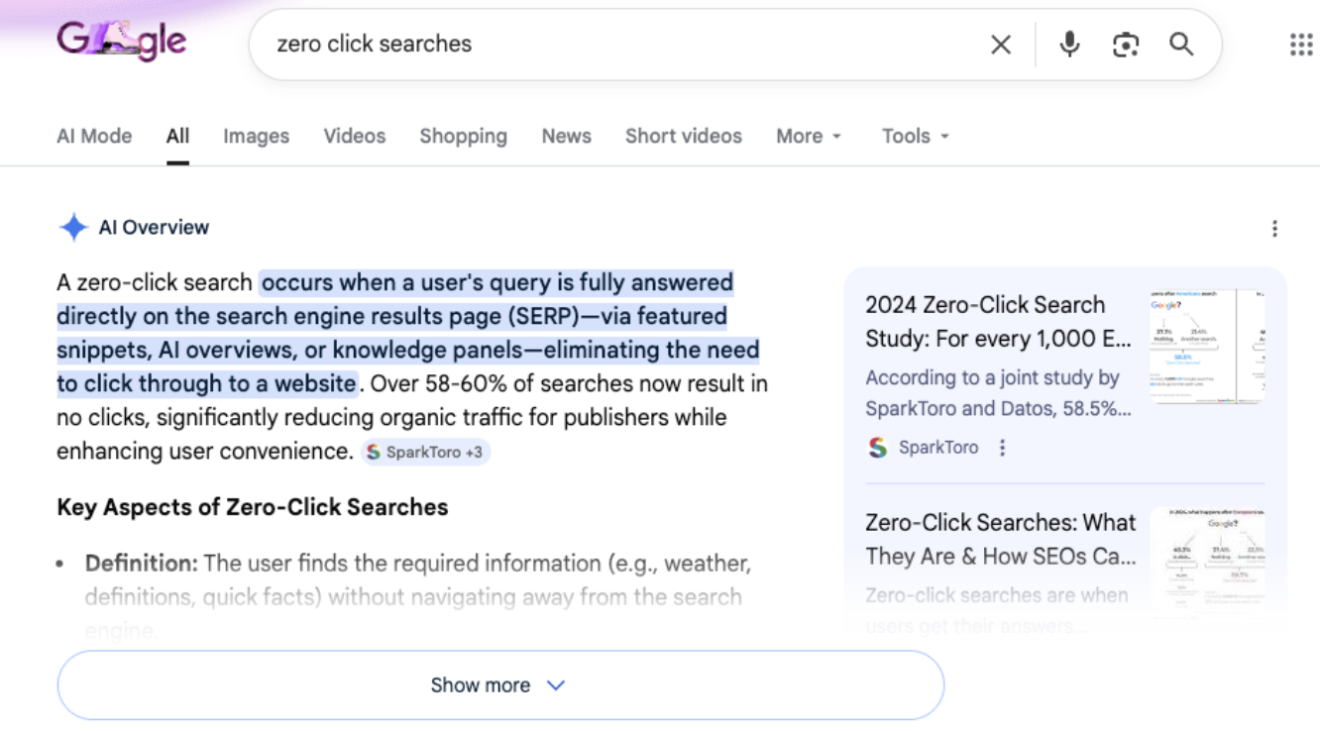
Google pulls content from websites and displays it in featured snippets, knowledge graphs, local packs, or AI-generated overviews. The user gets what they need. The website that provided the information gets no traffic.
Common examples include:
- Featured snippets: These are the boxed answer at the top of results
- Knowledge panels: The information boxes on the right side (usually for brands, people, or places)
- Local packs: The map and three business listings for local searches
- AI overviews: Google’s new AI-generated summaries that synthesise multiple sources
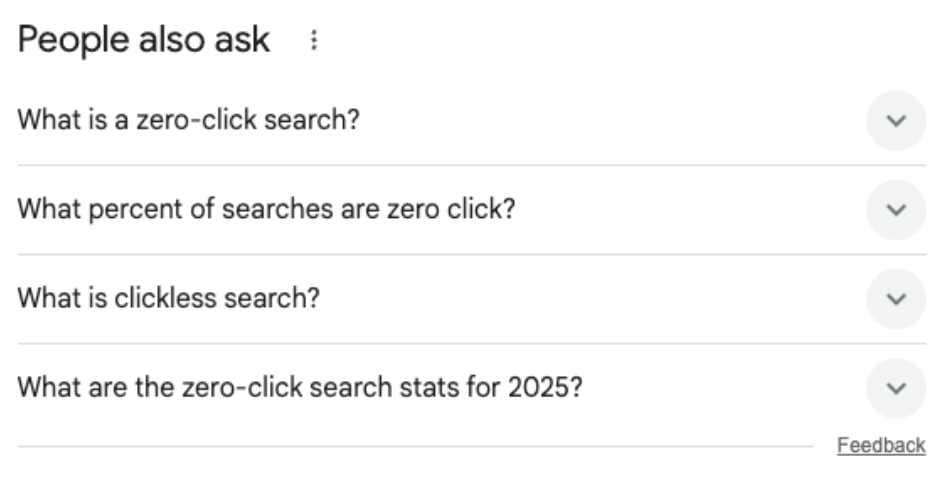
- People Also Ask boxes: Expandable questions with instant answers
Quick searches like “weather in Grand Cayman” or “convert USD to KYD” have always been zero-click (Google can even do maths for you if you type in the search bar). But now, more complex queries are getting the same treatment.
Why zero-click searches are increasing
The world has shifted with the evolution of generative AI, and so Google’s business model has shifted too. They want to keep users on their platform longer, which means answering questions directly instead of sending people away.
Three things are accelerating this:
- AI overviews are rolling out globally. Google’s Search Generative Experience (SGE) creates AI-written answers that pull from multiple sources. Users get a synthesised response without visiting any of the source websites.
- Mobile search dominates. On mobile, users want instant answers. Google optimises for this by surfacing quick information that doesn’t require a click.
- Voice search is growing. When someone asks Siri or Google Assistant a question, they get one spoken answer. That’s a zero-click result by design.
The trend isn’t reversing. Google has no incentive to send traffic away when they can answer questions themselves.
How zero-click searches impact your SEO strategy
Ranking well no longer guarantees traffic. You can hold position one for a keyword and still see your click-through rate drop to single digits if Google displays a featured snippet above you.
Here’s what changes:
- Traditional traffic metrics become less reliable. Impressions go up, clicks stay flat or drop. Your rankings look great on paper, but your website traffic tells a different story.
- Brand visibility matters more than clicks. Even if users don’t click, they see your brand name in the featured snippet or knowledge panel. That builds recognition, but it doesn’t drive conversions.
- Content ROI gets harder to measure. You’re creating content that Google uses to answer questions, but you’re not getting the traffic you used to. The value of that content becomes less clear.
For businesses running SEO campaigns in the Cayman Islands, this is particularly relevant for local searches. When someone searches “best restaurants in George Town,” they see a local pack with three listings, a map, and reviews. Most users pick from those three options without scrolling further.
If you’re not in that local pack, you’re invisible. Even if you rank fourth organically.
What you can actually do about it
You can’t stop zero-click searches. But you can adapt your strategy to work with them instead of against them.
Optimise for featured snippets strategically
Featured snippets steal clicks from position one, but they also put your brand at the top of the page. If you’re going to lose traffic anyway, you might as well own the snippet.
You should target question-based keywords and structure your content to answer them clearly. Use concise paragraphs (40-60 words), bullet points, and numbered lists. Google loves pulling these formats into snippets.
But here’s the key: don’t optimise every piece of content for snippets. Reserve this strategy for top-of-funnel, informational content where brand visibility matters more than immediate conversions.
Focus on high-intent, click-worthy keywords
Not all searches are going zero-click. Transactional and commercial investigation queries still drive clicks because users need more information before making a decision.
Keywords like “SEO services in the Cayman Islands” or “best web design agency Grand Cayman” require users to visit websites, compare options, and evaluate providers. Google can’t answer these queries with a snippet.
Shift more of your content strategy toward these high-intent keywords. They have lower search volume, but they convert better and they’re not being cannibalised by zero-click results.
Build your brand presence in knowledge panels
If you’re a local business, claim and optimise your Google Business Profile. This is non-negotiable. The local pack is a zero-click feature, but it still drives traffic because users click through to call, get directions, or visit your website.
For broader brand visibility, work on getting a knowledge panel. This requires building authority through consistent NAP (name, address, phone) information across the web, a strong Wikipedia presence (if applicable), and structured data markup on your website.
Knowledge panels don’t drive direct traffic, but they establish credibility. When users see your brand repeatedly in search results, they’re more likely to remember you and seek you out later.
Use structured data markup
Schema markup helps Google understand your content and display it in rich results. This won’t stop zero-click searches, but it increases your chances of appearing in featured snippets, FAQs, and other enhanced results.
Add FAQ schema to your service pages, HowTo schema to your guides, and LocalBusiness schema to your contact pages. It’s technical, but it works.
Create content that demands a click
Some content can’t be summarised in a snippet. Long-form guides, interactive tools, calculators, and in-depth case studies require users to visit your site.
If you’re writing about “how to improve local SEO,” Google can pull a quick answer. But if you’re offering a “complete local SEO audit checklist with 47 action items,” users need to click through to get the full value.
Make your content too valuable to ignore. Google can steal your summary, but they can’t steal your depth.
Track impressions and brand searches, not just clicks
Your analytics need to evolve. If zero-click searches are increasing, your traffic might drop even as your visibility grows.
Monitor your impressions in Google Search Console. If impressions are rising but clicks are flat, you’re likely appearing in zero-click features. That’s not ideal, but it’s not a disaster either.
Also track branded search volume. If more people are searching for your company name directly, your zero-click visibility is working. They’re seeing your brand in snippets and knowledge panels, then coming back to find you later.
The bigger picture for SEO in the Cayman Islands
Zero-click searches are a global trend, but they hit local businesses harder. Local packs, map results, and knowledge panels dominate local search results, leaving less room for traditional organic listings.
If you’re running a business in the Cayman Islands, your SEO strategy needs to account for this. Ranking on page one isn’t enough anymore. You need to rank in the local pack, own the featured snippet, or target keywords that still drive clicks.
This doesn’t mean SEO is dead. It means SEO is evolving. The businesses that adapt will win. The ones that keep chasing outdated metrics will wonder why their traffic is disappearing.
What this means for your content strategy
Stop creating content just to rank. Start creating content that builds authority, drives brand recognition, and targets high-intent keywords that actually convert.
Zero-click searches are here to stay. Google’s not going back to the old model where they sent traffic away freely. Your job is to figure out how to win in this new environment.
That means:
- Prioritising brand visibility over raw traffic numbers
- Targeting commercial and transactional keywords that still drive clicks
- Optimising for local search features like the local pack and Google Business Profile
- Creating content that’s too valuable to summarise in a snippet
- Tracking the right metrics (impressions, brand searches, conversions) instead of just clicks
If you’re serious about SEO in the Cayman Islands, you need a strategy that accounts for zero-click searches. Ignoring them won’t make them go away.
Ready to adapt your SEO strategy for the zero-click era? AirVu Media builds SEO campaigns that deliver measurable results, even as search behaviour evolves. We’ll help you dominate featured snippets, own your local pack, and target the keywords that actually drive revenue. Let’s talk about what’s possible for your business.